PowerApps Portals and Power Pages: Building External-Facing Applications
{% assign anonymousId = request.cookies['anonymousId'] %}
{% if anonymousId == blank %}
{% assign anonymousId = now | date: '%s' | append: request.ip %}
{% cookie 'anonymousId', anonymousId, 365 %}
{% endif %}
Session ID: {{ anonymousId }}
Diagram: See the official Microsoft documentation for architecture details.
Configure Power Pages provider:
Portal Management app → Site Settings

Authentication/OpenAuth/AzureADB2C/Authority = https://contosoexternal.b2clogin.com/contosoexternal.onmicrosoft.com/B2C_1_signupsignin/v2.0
Authentication/OpenAuth/AzureADB2C/ClientId = {app-id}
Authentication/OpenAuth/AzureADB2C/ClientSecret = {client-secret}
Authentication/OpenAuth/AzureADB2C/RedirectUri = https://contoso.powerappsportals.com/signin-aad-b2c
Authentication/OpenAuth/AzureADB2C/ExternalLogoutEnabled = true
Authentication/Registration/Enabled = true
User registration flow:
{% comment %} Custom registration page {% endcomment %}
<form method="post" action="/account/register">
  {% csrf %}

  <input type="email" name="email" ="Email" required />
  <input type="text" name="firstname" ="First Name" required />
  <input type="text" name="lastname" ="Last Name" required />
  <input type="password" name="password" ="Password" required />

  <button type="submit">Register</button>
</form>

{% if errors %}
  <ul class="alert alert-danger">
  {% for error in errors %}
```text
<li>{{ error.message }}</li>```
  {% endfor %}
  </ul>
{% endif %}
Local Authentication
Username/password accounts:
Architecture Overview: Site Settings → Authentication Registration Enabled = true
Password reset:
{% comment %} Forgot password page {% endcomment %}
<form method="post" action="/account/forgotpassword">
  {% csrf %}

  <input type="email" name="email" ="Email" required />
  <button type="submit">Send Reset Link</button>
</form>

{% comment %} Email template for reset link {% endcomment %}
Subject: Password Reset Request

Click the link below to reset your password:
{{ reset_url }}

This link expires in 24 hours.
Social Identity Providers
Microsoft, Google, Facebook, LinkedIn:
Architecture Overview: Portal Management app → Site Settings
Sign-in page:
<h2>Sign in</h2>

<a href="/signin-microsoft" class="btn btn-primary">
  <i class="fab fa-microsoft"></i> Sign in with Microsoft
</a>

<a href="/signin-google" class="btn btn-danger">
  <i class="fab fa-google"></i> Sign in with Google
</a>

<a href="/signin-facebook" class="btn btn-info">
  <i class="fab fa-facebook"></i> Sign in with Facebook
</a>

<hr />

<form method="post" action="/account/login">
  {% csrf %}
  <input type="text" name="username" ="Username" />
  <input type="password" name="password" ="Password" />
  <button type="submit">Sign in</button>
</form>

<a href="/account/register">Create account</a>
<a href="/account/forgotpassword">Forgot password?</a>
Web Roles and Permissions
Web Roles
Role hierarchy:
Architecture Overview: Web Roles (Portal Management app):
Create web role:
Architecture Overview: Portal Management app → Web Roles → New
Table Permissions
Row-level security:
Architecture Overview: Portal Management app → Table Permissions → New
Access type examples:
Architecture Overview: Contact (user's own records):
Multiple permissions:
Architecture Overview: Customer can:
Web Templates (Liquid)
Liquid Template Language
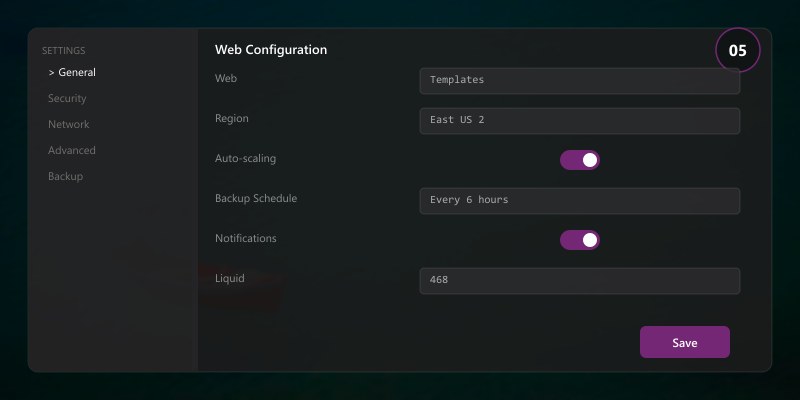
Basic syntax:
{% comment %} Variables {% endcomment %}
{% assign userName = user.fullname %}
<p>Welcome, {{ userName }}!</p>

{% comment %} Conditionals {% endcomment %}
{% if user %}
  <p>Signed in as {{ user.email }}</p>
{% else %}
  <a href="/signin">Sign in</a>
{% endif %}

{% comment %} Loops {% endcomment %}
<ul>
{% for case in cases %}
  <li>{{ case.title }} - {{ case.statuscode.label }}</li>


{% endfor %}
</ul>

{% comment %} Filters {% endcomment %}
<p>Posted {{ case.createdon | date: '%B %d, %Y' }}</p>
<p>{{ case.description | truncate: 100 }}</p>
Dataverse Queries
EntityList (multiple records):
{% entitylist
  name: "Active Cases"
  pagesize: 10
  filter: "statuscode eq 1"
  order: "createdon desc"
%}
  <table class="table">
```text
<thead>
  <tr>
    <th>Case Number</th>
    <th>Title</th>
    <th>Status</th>
    <th>Created</th>
  </tr>
</thead>
<tbody>
{% for case in entitylist.records %}
  <tr>
    <td>{{ case.ticketnumber }}</td>
    <td><a href="/cases/{{ case.id }}">{{ case.title }}</a></td>
    <td>{{ case.statuscode.label }}</td>
    <td>{{ case.createdon | date: '%m/%d/%Y' }}</td>
  </tr>
{% endfor %}
</tbody>```
  </table>

  {% comment %} Pagination {% endcomment %}
  <nav>
```text
<ul class="pagination">
  {% if entitylist.page > 1 %}
    <li><a href="?page={{ entitylist.page | minus: 1 }}">Previous</a></li>
  {% endif %}

  <li>Page {{ entitylist.page }} of {{ entitylist.total_pages }}</li>

  {% if entitylist.page < entitylist.total_pages %}
    <li><a href="?page={{ entitylist.page | plus: 1 }}">Next</a></li>
  {% endif %}
</ul>```
  </nav>
{% endentitylist %}
EntityView (single record):
{% entityview
  logical_name: 'incident'
  id: request.params.id
%}
  <h1>{{ entityview.title }}</h1>

  <dl>
```text
<dt>Case Number</dt>
<dd>{{ entityview.ticketnumber }}</dd>

<dt>Status</dt>
<dd>{{ entityview.statuscode.label }}</dd>

<dt>Priority</dt>
<dd>{{ entityview.prioritycode.label }}</dd>

<dt>Created</dt>
<dd>{{ entityview.createdon | date: '%B %d, %Y %I:%M %p' }}</dd>

<dt>Description</dt>
<dd>{{ entityview.description }}</dd>```
  </dl>

  {% if entityview.customer %}
```text
<p>Customer: {{ entityview.customer.fullname }}</p>```
  {% endif %}
{% endentityview %}
Reusable Components
Header template:
{% comment %} Web Template: Header {% endcomment %}
<header class="site-header">
  <div class="container">
```text
<a href="/" class="logo">
  <img src="{{ site.logo }}" alt="{{ site.title }}" />
</a>

<nav>
  <ul class="nav">
    <li><a href="/">Home</a></li>
    <li><a href="/products">Products</a></li>
    <li><a href="/support">Support</a></li>

    {% if user %}
      <li><a href="/account">My Account</a></li>
      <li><a href="/signout">Sign Out</a></li>
    {% else %}
      <li><a href="/signin">Sign In</a></li>
    {% endif %}
  </ul>
</nav>```
  </div>
</header>

{% comment %} Include in page template {% endcomment %}
{% include 'Header' %}
Entity Forms
Create Form
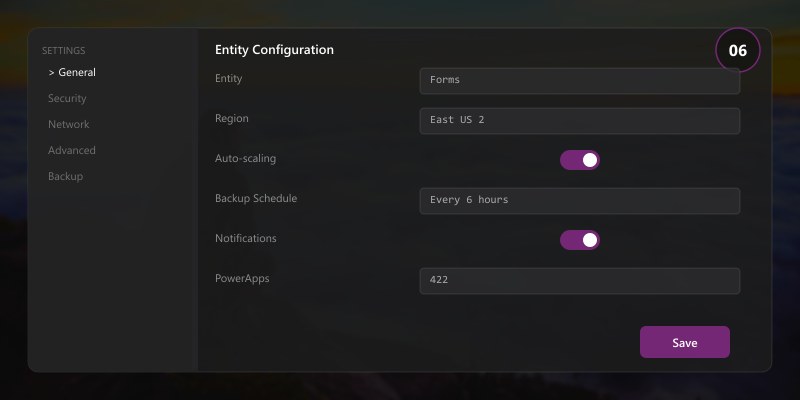
Configuration:
Diagram: See the official Microsoft documentation for architecture details.
Embed in web page:
{% comment %} Web Template: Create Case {% endcomment %}
<h1>Create Support Case</h1>

<p>Describe your issue and we'll get back to you within 24 hours.</p>

{% entityform name: 'Create Case Form' %}

{% comment %} Custom styling {% endcomment %}
<style>
  .entityform .form-group { margin-bottom: 20px; }
  .entityform label { font-weight: bold; }
  .entityform .required:after { content: "*"; color: red; }
</style>
Edit Form
Update existing record:
Diagram: See the official Microsoft documentation for architecture details.
Edit page with security:
{% entityview logical_name: 'incident', id: request.params.id %}
  {% comment %} Check user owns this case {% endcomment %}
  {% if entityview.customer.id == user.id %}

```text
<h1>Edit Case: {{ entityview.ticketnumber }}</h1>
{% entityform name: 'Edit Case Form' %}
{% else %}
<div class="alert alert-danger">
  You do not have permission to edit this case.
</div>```
  {% endif %}
{% endentityview %}
Read-Only Form
View mode:
Entity Form: View Case Form
Mode: ReadOnly
Form Name: Information
Show Unsupported Fields: No (hide complex controls)

Embed:
{% entityform name: 'View Case Form' %}
Entity Lists
Basic List
Configuration:
Architecture Overview: Portal Management app → Entity Lists → New
Embed in page:
{% comment %} Web Template: My Cases {% endcomment %}
<h1>My Support Cases</h1>

{% entitylist
  name: "My Cases List"
%}
  {% comment %} Custom rendering instead of default grid {% endcomment %}
  <div class="cases">
  {% for case in entitylist.records %}
```text
<div class="case-card">
  <h3>
    <a href="/cases/{{ case.id }}">{{ case.title }}</a>
  </h3>
  <p class="case-number">Case #{{ case.ticketnumber }}</p>
  <p class="case-status">
    <span class="badge badge-{{ case.statuscode.value }}">
      {{ case.statuscode.label }}
    </span>
  </p>
  <p class="case-date">Created {{ case.createdon | date: '%m/%d/%Y' }}</p>
  <p>{{ case.description | truncate: 150 }}</p>
</div>```
  {% endfor %}
  </div>

  {% include 'Pagination' with entitylist %}
{% endentitylist %}
Advanced Filtering
Filter configuration:
Diagram: See the official Microsoft documentation for architecture details.
Custom filter UI:
<form method="get" class="case-filters">
  <label>Status:</label>
  <select name="statuscode">
```text
<option value="">All</option>
<option value="1" {% if request.params.statuscode == "1" %}selected{% endif %}>Active</option>
<option value="5" {% if request.params.statuscode == "5" %}selected{% endif %}>Resolved</option>
<option value="6" {% if request.params.statuscode == "6" %}selected{% endif %}>Closed</option>```
  </select>

  <label>Priority:</label>
  <select name="prioritycode">
```text
<option value="">All</option>
<option value="1" {% if request.params.prioritycode == "1" %}selected{% endif %}>High</option>
<option value="2" {% if request.params.prioritycode == "2" %}selected{% endif %}>Normal</option>
<option value="3" {% if request.params.prioritycode == "3" %}selected{% endif %}>Low</option>```
  </select>

  <button type="submit">Filter</button>
</form>

{% entitylist
  name: "My Cases List"
  filter: "statuscode eq {{ request.params.statuscode | default: '' }} and prioritycode eq {{ request.params.prioritycode | default: '' }}"
%}
  {% comment %} Render list {% endcomment %}
{% endentitylist %}
Site Settings and Configuration
Key site settings:
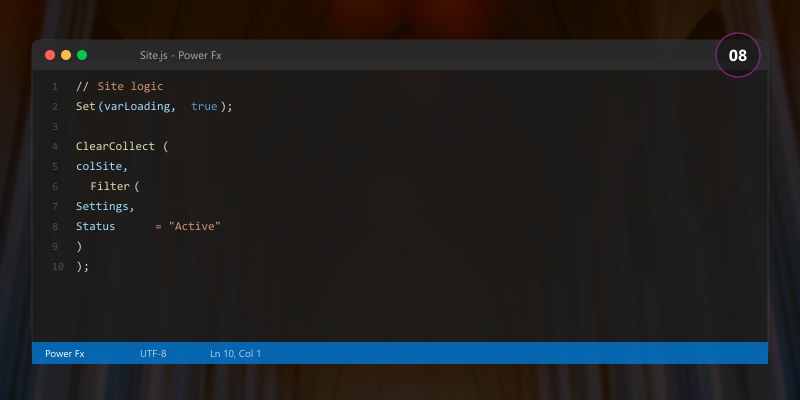
Diagram: See the official Microsoft documentation for architecture details.
Best Practices
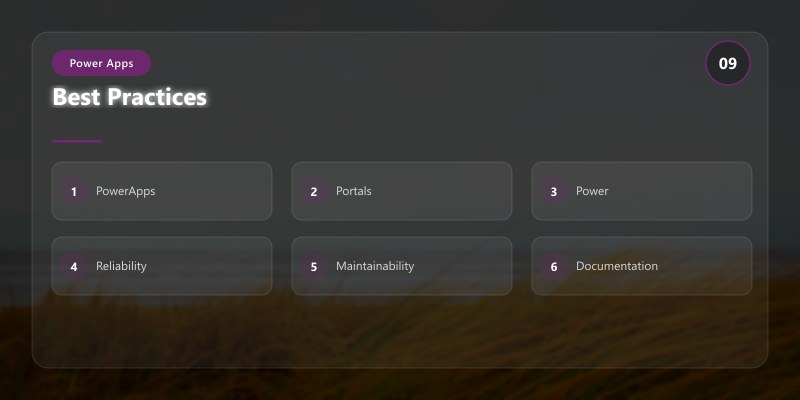
- Authentication: Use Azure AD B2C for scalability, not local accounts
- Permissions: Always configure table permissions for authenticated users
- Performance: Enable output caching, optimize Dataverse queries
- Security: Enforce HTTPS, implement rate limiting, use CAPTCHA
- SEO: Configure meta tags, sitemap, friendly URLs
- Monitoring: Enable Application Insights for portal telemetry
Troubleshooting
User cannot access page:
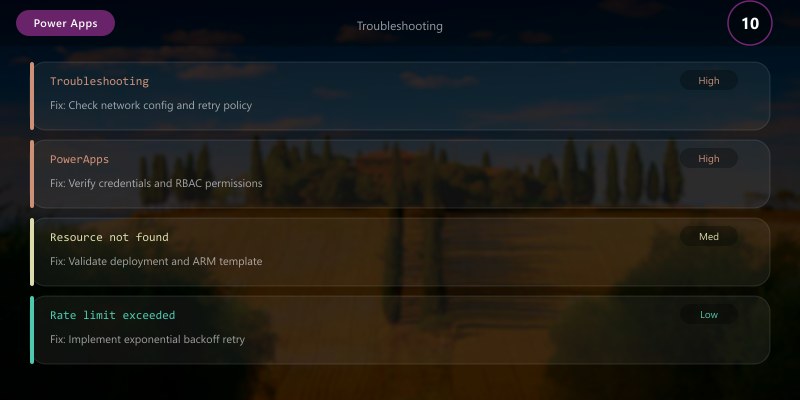
- Check web page Publishing State = Published
- Verify Web Page Access Control Rules (if restricted)
- Check user has assigned Web Role
- Confirm table permissions granted to web role
Entity form not saving:
- Verify table permissions include Create/Write privileges
- Check Dataverse form exists and is published
- Review required fields are populated
- Check for business rules/plugins blocking save
Performance issues:
- Enable output caching for static pages
- Reduce entity list page size (10-20 records)
- Optimize Dataverse views (limit columns, add indexes)
- Use CDN for images/CSS/JavaScript
Architecture Decision and Tradeoffs
When designing low-code development solutions with Power Apps, consider these key architectural trade-offs:
| Approach | Best For | Tradeoff |
|---|---|---|
| Managed / platform service | Rapid delivery, reduced ops burden | Less customisation, potential vendor lock-in |
| Custom / self-hosted | Full control, advanced tuning | Higher operational overhead and cost |
Recommendation: Start with the managed approach for most workloads and move to custom only when specific requirements demand it.
Validation and Versioning
- Last validated: April 2026
- Validate examples against your tenant, region, and SKU constraints before production rollout.
- Keep module, CLI, and SDK versions pinned in automation pipelines and review quarterly.
Security and Governance Considerations
- Apply least-privilege access using RBAC roles and just-in-time elevation for admin tasks.
- Store secrets in managed secret stores and avoid embedding credentials in scripts or source files.
- Enable audit logging, data protection policies, and periodic access reviews for regulated workloads.
Cost and Performance Notes
- Define budgets and alerts, then monitor usage and cost trends continuously after go-live.
- Baseline performance with synthetic and real-user checks before and after major changes.
- Scale resources with measured thresholds and revisit sizing after usage pattern changes.
Official Microsoft References
- https://learn.microsoft.com/power-apps/
- https://learn.microsoft.com/power-platform/admin/
- https://learn.microsoft.com/power-platform/guidance/
Public Examples from Official Sources
- These examples are sourced from official public Microsoft documentation and sample repositories.
- Documentation examples: https://learn.microsoft.com/power-apps/
- Sample repositories: https://github.com/microsoft/PowerApps-Samples
- Prefer adapting these examples to your tenant, subscriptions, and governance requirements before production use.
Key Takeaways
- Power Pages extends Dataverse to external users (customers, partners)
- Azure AD B2C provides scalable authentication for thousands of users
- Web roles and table permissions enforce row-level security
- Liquid templates enable custom page layouts and Dataverse queries
- Entity forms and lists provide no-code CRUD operations
- Portal Management app configures all site settings and permissions
Next Steps
- Configure Azure Front Door for global CDN and WAF protection
- Implement multi-factor authentication for sensitive operations
- Add custom APIs with Azure Functions for complex business logic
- Enable Application Insights for monitoring and diagnostics
Additional Resources
Extend Dataverse beyond the organization.